Current Glioma Management
Glioblastoma is one of the most prevalent
and aggressive brain malignancies1,2
As of 2019, the prevalence of all primary brain and CNS tumors in the United States was ≈1,300,000 cases, 14% of which were malignant (≈195,000 cases)3
Glioblastoma is most prevalent in people aged >40 years2
People with GBM have a median overall survival of ≈15 months from diagnosis4

MRIs, the current standard of care for imaging in glioma, may yield inconclusive results5,6
Supplementing MRIs with PET tracers can improve accuracy. However, FDG PET—the most commonly used PET tracer in oncology—has limited utility for gliomas.7,8
Limitations of CE MRI5,9,10
Limitations of FDG PET8,10
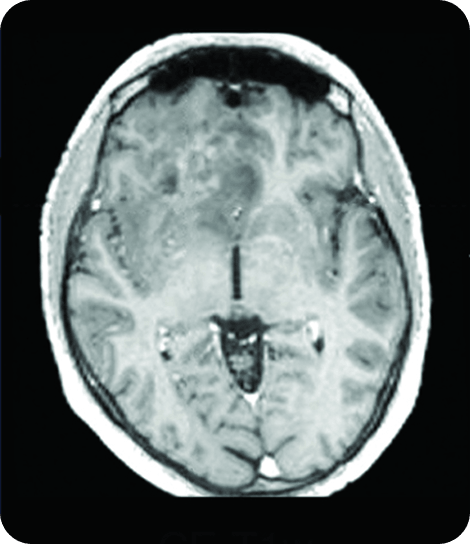
Adapted from Galldiks N, et al. Neuro Oncol. 2024;26(7):1181-1194.10 By permission of Oxford University Press on behalf of the Society for Neuro-Oncology.
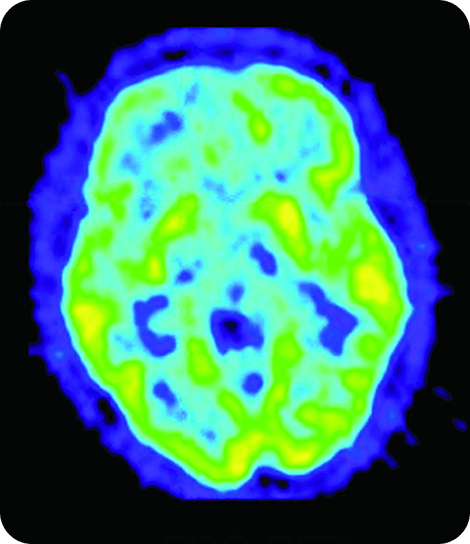
Adapted from Galldiks N, et al. Neuro Oncol. 2024;26(7):1181-1194.10 By permission of Oxford University Press on behalf of the Society for Neuro-Oncology.
May underestimate tumor size and growth because it nonspecifically reflects vascular pathology, leading to undertreatment
Hard to read for glioma because it has uptake in healthy brain tissue
May inaccurately show treatment-related changes as tumor recurrence, leading to overtreatment
High background signal makes delineating brain tumors difficult
Limitations of CE MRI5,9,10
Adapted from Galldiks N, et al. Neuro Oncol. 2024;26(7):1181-1194.10 By permission of Oxford University Press on behalf of the Society for Neuro-Oncology.
May underestimate tumor size and growth because it nonspecifically reflects vascular pathology, leading to undertreatment
May inaccurately show treatment-related changes as tumor recurrence, leading to overtreatment
Limitations of FDG PET8,10
Adapted from Galldiks N, et al. Neuro Oncol. 2024;26(7):1181-1194.10 By permission of Oxford University Press on behalf of the Society for Neuro-Oncology.
Hard to read for glioma because it has uptake in healthy brain tissue
High background signal makes delineating brain tumors difficult


CE, contrast-enhanced; CNS, central nervous system; FDG, fluorodeoxyglucose-18; GBM, glioblastoma multiforme; MRI, magnetic resonance imaging; PET, positron emission tomography.
References: 1. Thakkar JP, Peruzzi PP, Prabhu VC. Glioblastoma multiforme. American Association of Neurological Surgeons. Updated April 15, 2024. Accessed February 11, 2026. https://www.aans.org/patients/conditions-treatments/glioblastoma-multiforme/ 2. Grochans S, Cybulska AM, Simińska D, et al. Epidemiology of glioblastoma multiforme–literature review. Cancers (Basel). 2022;14(10):2412. 3. CBTRUS fact sheet 2025. Central Brain Tumor Registry of the United States. Accessed February 11, 2026. https://cbtrus.org/cbtrus-fact-sheet 4. Singhal S, Kumar A, Rajput NS, Lodi AI, Bhandari V. Assessment of progression-free survival and overall survival in patients of glioblastoma post-radiation therapy. Int J Neurooncol. 2023;6:10-13. 5. Law I, Albert NL, Arbizu J, et al. Joint EANM/EANO/RANO practice guidelines/SNMMI procedure standards for imaging of gliomas using PET with radiolabelled amino acids and [18F]FDG: version 1.0. Eur J Nucl Med Mol Imaging. 2019;46(3):540-557. 6. Rosen J, Ceccon G, Bauer EK, et al. Cost effectiveness of 18F-FET PET for early treatment response assessment in glioma patients after adjuvant [generic Temodar] chemotherapy. J Nucl Med. 2022;63(11):1677-1682. 7. Smith NJ, Deaton TK, Territo W, et al. Hybrid 18F-fluoroethyltyrosine PET and MRI with perfusion to distinguish disease progression from treatment-related change in malignant brain tumors: the quest to beat the toughest cases. J Nucl Med. 2023;64(7):1087-1092. 8. Soni N, Ora M, Jena A, et al. Amino acid tracer PET MRI in glioma management: what a neuroradiologist needs to know. AJNR Am J Neuroradiol. 2023;44(3):236-246. 9. Muthukumar S, Darden J, Crowley J, Witcher M, Kiser J. A comparison of PET tracers in recurrent high-grade gliomas: a systematic review. Int J Mol Sci. 2022;24(1):408. 10. Galldiks N, Kaufmann TJ, Vollmuth P, et al. Challenges, limitations, and pitfalls of PET and advanced MRI in patients with brain tumors: a report of the PET/RANO Group. Neuro Oncol. 2024;26(7):1181-1194.

