Amino Acid PET Tracers
Amino acid PET tracers mark a step
forward
for imaging technology1,2
PET imaging can guide clinical decision-making with
molecular,
functional, and metabolic information that complements
MRI3

Clarifying glioma gray areas: the difference between MRI and PET imaging
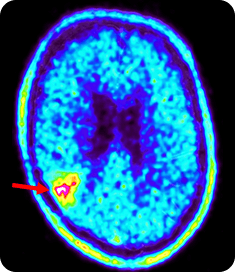
A side-by-side comparison of a sequential T1-weighted post-contrast MRI and 18F-FET of the same patient4
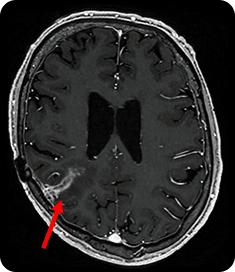
Post-contrast MRI scan showing an enhancing region that was inconclusive
18F-FET demonstrated focal uptake laterally near the margins of the resection cavity with a TBRmax of 3.2, meeting the threshold for recurrent disease
PET imaging helped determine resection was the appropriate clinical decision
Post-contrast MRI scan showing an enhancing region that was inconclusive

18F-FET demonstrated focal uptake laterally near the margins of the resection cavity with a TBRmax of 3.2, meeting the threshold for recurrent disease
PET imaging helped determine resection was the appropriate clinical decision
Certain investigational amino acid PET tracers offer advanced methods of glioma imaging, yet can still come with limitations

18F-fluciclovine misses certain types of brain tumors due to its mechanism of action5,6

18F-FDOPA is taken up by the striatum, which may limit its ability to evaluate tumor extent7

11C-MET imposes logistical challenges with its short half-life7

18F-FET is currently unavailable in the United States8,9


These agents are not made commercially available or approved for gliomas. They can be made and used investigationally.
11C-MET, 11C-methyl-L-methionine; 18F-FDOPA, 18F-fluorodopa; 18F-FET, 18F-fluoro-ethyl-tyrosine; MRI, magnetic resonance imaging; PET, positron emission tomography; TBRmax, maximum tumor-to-background ratio.
References: 1. Smith NJ, Deaton TK, Territo W, et al. Hybrid 18F-fluoroethyltyrosine PET and MRI with perfusion to distinguish disease progression from treatment-related change in malignant brain tumors: the quest to beat the toughest cases. J Nucl Med. 2023;64(7):1087-1092. 2. Soni N, Ora M, Jena A, et al. Amino acid tracer PET MRI in glioma management: what a neuroradiologist needs to know. AJNR Am J Neuroradiol. 2023;44(3):236-246. 3. Albert NL, Weller M, Suchorska B, et al. Response Assessment in Neuro-Oncology working group and European Association for Neuro-Oncology recommendations for the clinical use of PET imaging in gliomas. Neuro Oncol. 2016;18(9):1199-1208. 4. Data on File. Patient Cases. Telix Pharmaceuticals. 2025. 5. Scarpelli ML, Healey DR, Mehta S, Quarles CC. Imaging glioblastoma with 18F-fluciclovine amino acid positron emission tomography. Front Oncol. 2022;12:829050. 6. Axumin. Prescribing information. Blue Earth Diagnostics Ltd; 2022. 7. Galldiks N, Lohmann P, Fink GR, Langen K-J. Amino acid PET in neurooncology. J Nucl Med. 2023;64(5):693-700. 8. FDA briefing document—PET diagnostic radiopharmaceutical drugs. Division of Imaging and Radiation Medicine (DIRM), OSM, OND, CDER. Published August 1, 2023. Accessed January 27, 2026. https://www.fda.gov/media/170658/download 9. Wang L, Lieberman BP, Ploessl K, Kung HF. Synthesis and evaluation of 18F labeled FET prodrugs for tumor imaging. Nucl Med Biol. 2014;41(1):58-67.

